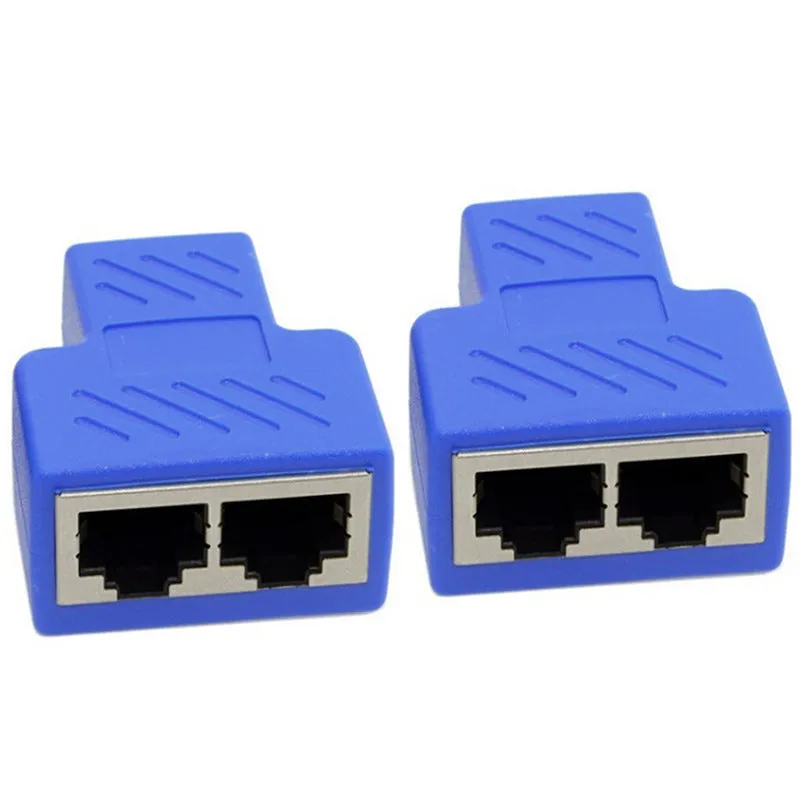
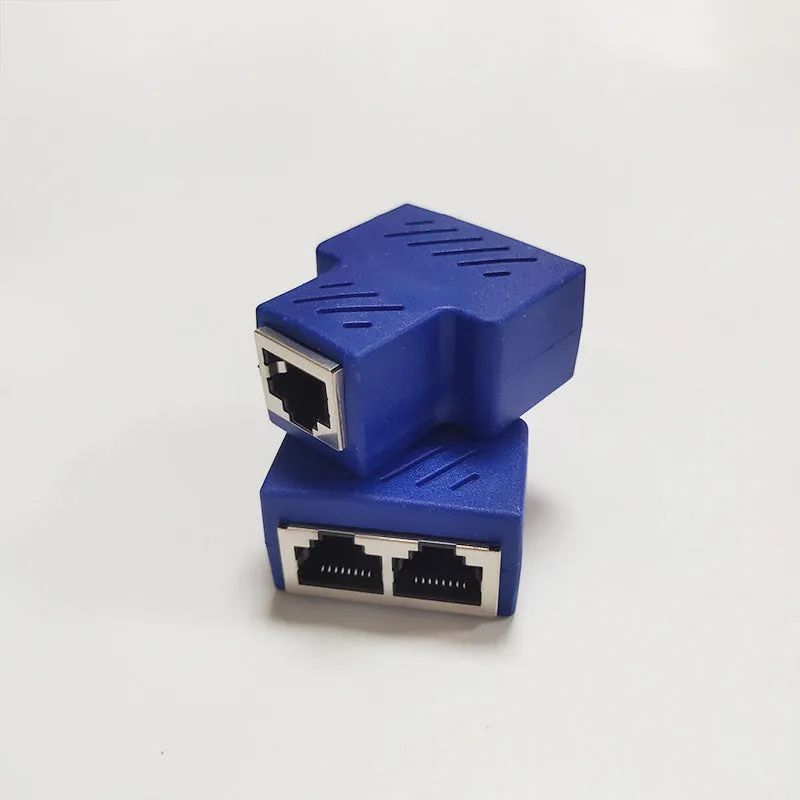
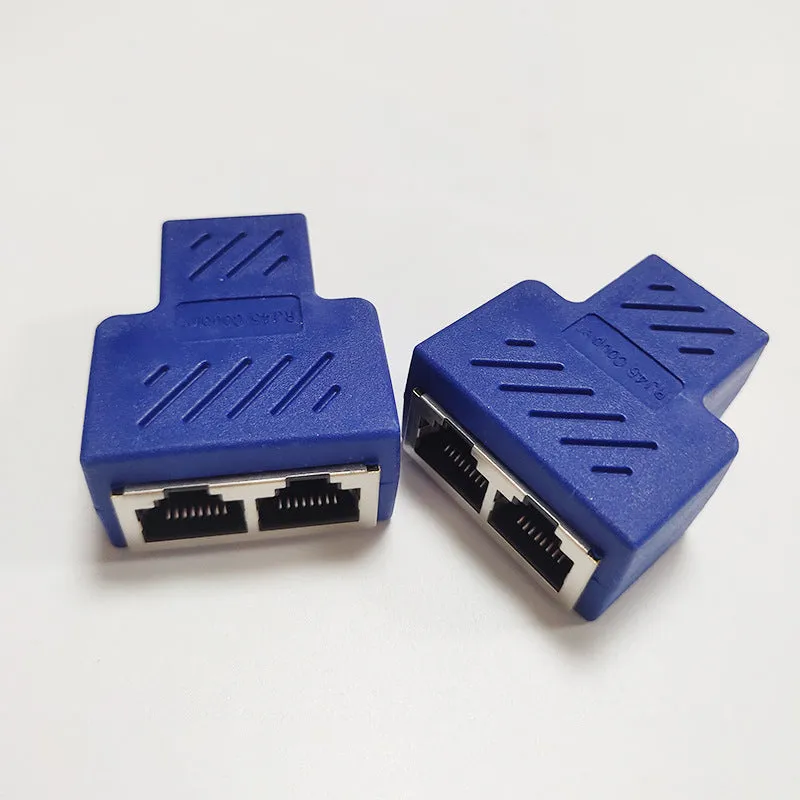
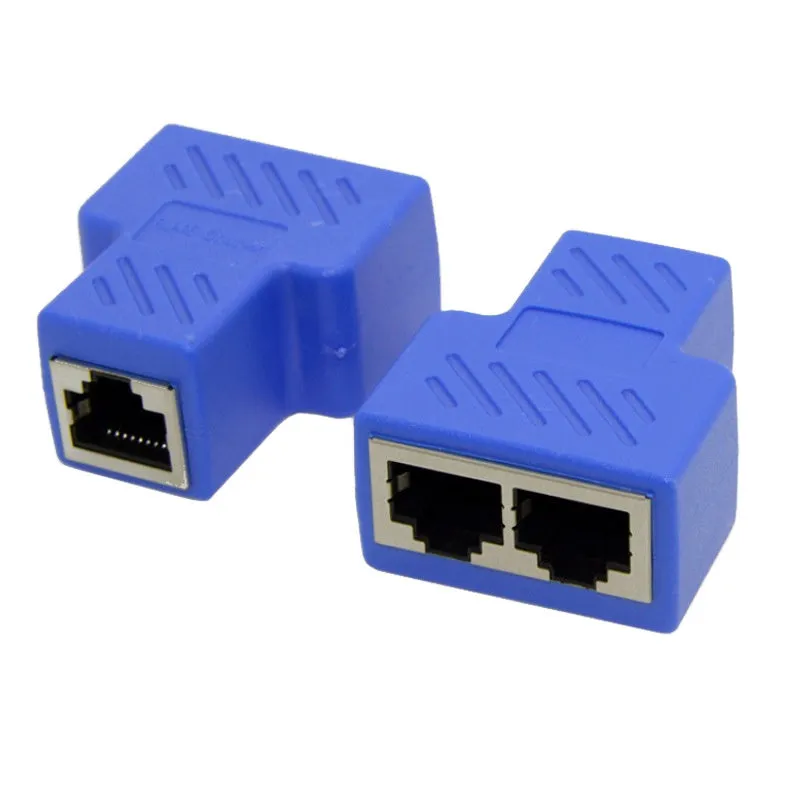
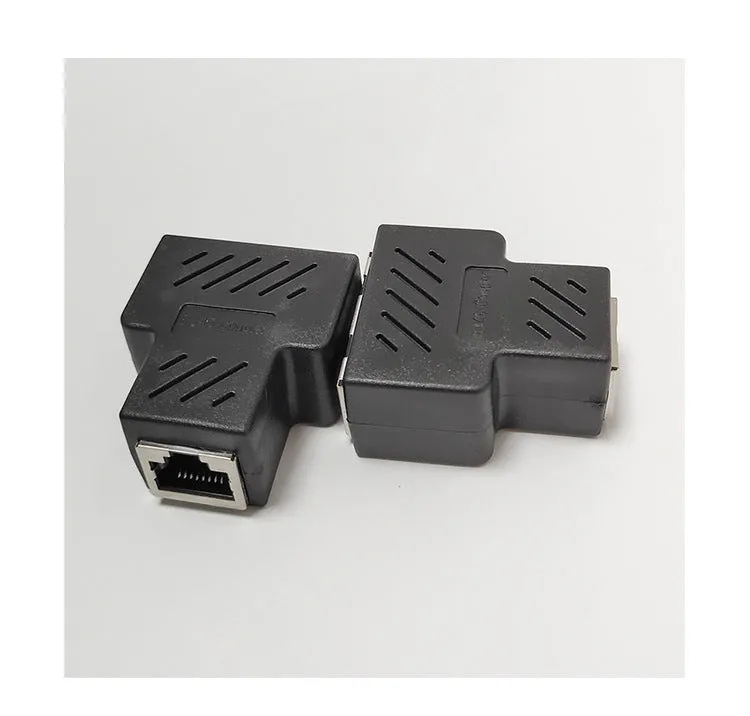
RJ45 network cable splitter, three-way tee connector for IPTV and network cable extension, injection-moulded plastic construction, one male to two female port adapter in white, yellow, red, blue, or black colour options.


RJ45 network cable splitter, three-way tee connector for IPTV and network cable extension, injection-moulded plastic construction, one male to two female port adapter in white, yellow, red, blue, or black colour options.
RJ45 Network Cable Splitter: A One-to-Two Adapter for IPTV and Basic Network Extension

This RJ45 network cable splitter, also referred to as a three-way tee connector, provides a straightforward physical method for branching a single Ethernet cable connection to two separate devices. It is a passive adapter, meaning it contains no active electronics, and is commonly utilised in scenarios where you need to share a signal from one source, such as for distributing an IPTV feed or creating a simple extension point in a home or office network. The product is injection-moulded from plastic and comes in a choice of five colours, offering a basic, cost-effective solution for cable management where running a second dedicated cable back to the router is impractical.
Features and Construction

This adapter is designed around the standard RJ45 connector format used for Ethernet networking. Its primary function is to provide an additional physical connection point, not to manage or boost network traffic.
Material and Build
The splitter unit is constructed using an injection-moulding process, forming a durable plastic housing that encases the internal wiring and contact pins. This manufacturing method is typical for such connectivity accessories, resulting in a lightweight and compact form factor. The product is available in five colour variants: white, yellow, red, blue, and black, allowing for optional colour-coding of cables or matching your existing equipment.
Size and Practical Fit
The adapter maintains the standard RJ45 plug and socket dimensions, ensuring compatibility with typical Ethernet patch cables. Its tee-shaped design houses one male RJ45 plug on one end and two female RJ45 ports on the opposite side. This configuration allows it to be inserted directly into a wall socket, router, or modem port, creating two output connections. As a passive splitter, it does not require external power.
Uses and Placement

The adapter is suited for specific, simple networking tasks where signal management is handled by the source device or is not a critical factor.
Event or Professional Use
In temporary setups, such as trade shows, presentations, or events requiring a quick network drop for two devices like a presentation laptop and a printer, this splitter can offer a rapid cabling solution. It can also be useful for IT technicians or installers needing a temporary testing point or a way to quickly verify connectivity for two endpoints from a single known-good port.
Everyday Home Use
The most common domestic application is for IPTV (Internet Protocol Television) setups, where a single set-top box feed from a broadband router might need to be shared with a second television in another room using an additional decoder box. It can also serve to connect two devices, like a gaming console and a smart TV, to a single wall Ethernet socket in a living room, provided the network hardware supports the shared connection.
Benefits and Buying Value
The value of this product lies in its simplicity, low cost, and the specific problem it solves for users with straightforward cabling needs.
Reuse and Low Maintenance
As a purely physical connector with no moving parts or consumables, the splitter requires no maintenance and can be reused indefinitely across different setups. Its robust plastic construction is designed to withstand repeated plugging and unplugging of standard Ethernet cables. The inclusion of two units in the pack provides an immediate spare or allows for configuring two separate split points in the home.
Why Choose This Product
Choose this RJ45 splitter if you have a clear need to physically connect two Ethernet-enabled devices to one source port for basic signal sharing or extension, particularly for IPTV. It is a practical purchase when you want to avoid the hassle and cost of installing a second network cable through walls or over long distances. It is important to understand its limitations: it does not function as a network switch, will not increase bandwidth, and may not be suitable for high-speed data transfers between two active devices on the same split connection, depending on your router's capabilities.